








 Published: 2026-07-13
 Views: 118
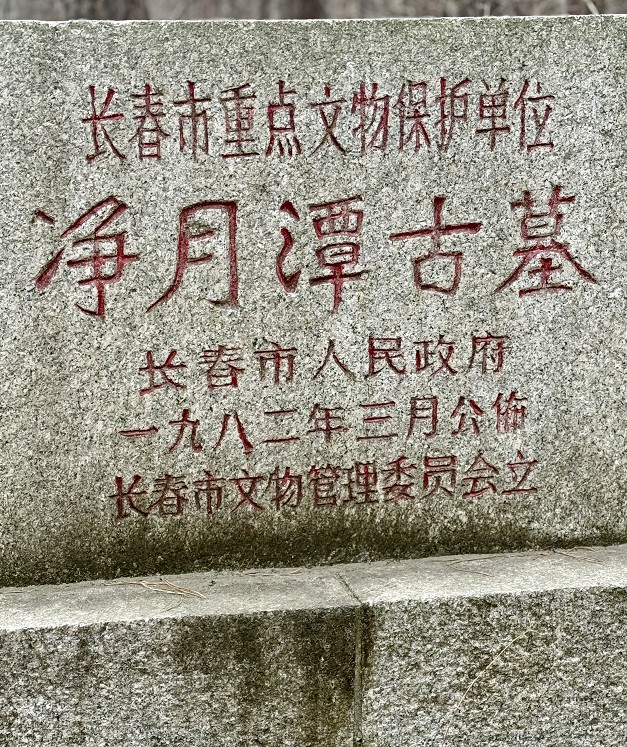
On the hillside of the forest bathhouse in Jingyuetan Scenic Area,along the direction of the Binglinghua Valley boardwalk,there is an ancient tomb ruins of Jurchen nobles from the Jin Dynasty.Before the construction of a water source,this place was close to Xiaoyaozhantun,with a small river flowing along the river in front.Due to the presence of stone carvings such as Shiyang,Shihu,and Shiren in front of the tomb,it has long been known as Shiyang Shihu Mountain.The tomb was not excavated after liberation,and in 1982,the Shiyang Shihushan tomb was listed as a key protected cultural relic at the city level.
In ancient times,it was customary to erect stone carvings in front of tombs,also known as"stone statues".Groups of stone statues standing opposite each other in front of the tomb form a passage called the Shinto.The ancient tomb of Shihu Mountain in Shiyang has two stone figures,two stone sheep and two stone tigers,standing in sequence from the top of the mountain to the bottom.The stone figures are literate and skilled,with their heads lost and their bodies standing 1.65 meters tall.They wear long robes,narrow sleeves,round collars,waist ties,and bow and arrow shaped patterns,with their hands holding water steps,and their feet wearing boots.Their attire is similar to that of officials in the Song Dynasty in the Central Plains.The body of the stone sheep is lying down,with a length of 0.94 meters and a height of 0.6 meters.Except for a slightly damaged snout,the rest of the body is well preserved.Shi Hu squatted and fell,with his forelimbs and snout damaged,both measuring 1.1 meters in height.The stone carvings stand opposite each other,forming a divine path about 35M long and 18M wide in the middle,with broken blue bricks and cloth patterned tiles nearby.From the perspective of the style of stone carving,it is quite consistent with the tomb stone carving of Wanyan Xiyin(a prominent minister in the early years of the Jin Dynasty and creator of Jurchen script)in the Shulan Jin Dynasty.This is of great significance for the systematic study of the burial style,customs,culture,and art of the Jin Dynasty.
According to the"Annals of the Song Dynasty",for the funerals of officials,"two stone sheep,tigers,and two pillars each,with two stone figures added for those above the third rank.The Jin Dynasty imitated the Song Dynasty system,so it was determined that the owner of this cemetery should have a rank of at least third grade and a burial scale of at least medium-sized.The stone figure costumes in front of the tomb are close to the style of the Song Dynasty,indicating that they have been influenced by the Central Plains culture and have deviated from the traditional customs of the Jurchen ethnic group.Therefore,their era should be in the middle of the Jin Dynasty after the Jin Dynasty entered the Central Plains.
Since the 1980s,provincial and municipal cultural relics management departments,as well as archaeological research units,have conducted multiple investigations and confirmed that the Shiyang Shihushan Ancient Tomb and the Wanyan Loushi Tomb are located in the direction of due south and north,on the same meridian with a straight-line distance of less than 10 kilometers.The buried officials inside should be third grade or above officials under the command of Wanyan Loushi.Wanyan Loushi(1078-1130),a member of the Wanyan tribe of the Jurchen ethnic group,was a famous general in the early Jin dynasty.He made outstanding achievements in the battle against the Liao dynasty and had 10000 households in Huanglong Prefecture.After Lou Shi's death,he was posthumously honored as the Prince of Shen.Emperor Taizong of Jin personally sent guards to escort Lou Shi's coffin and buried it in his hometown,Ojili in the southeast of Jeju,which is Shibeiling in the northeast of Jingyue Lake(Liujialu Tun,Fengchan Village,Jingyue District).