









 Published: 2026-07-13
 Views: 123
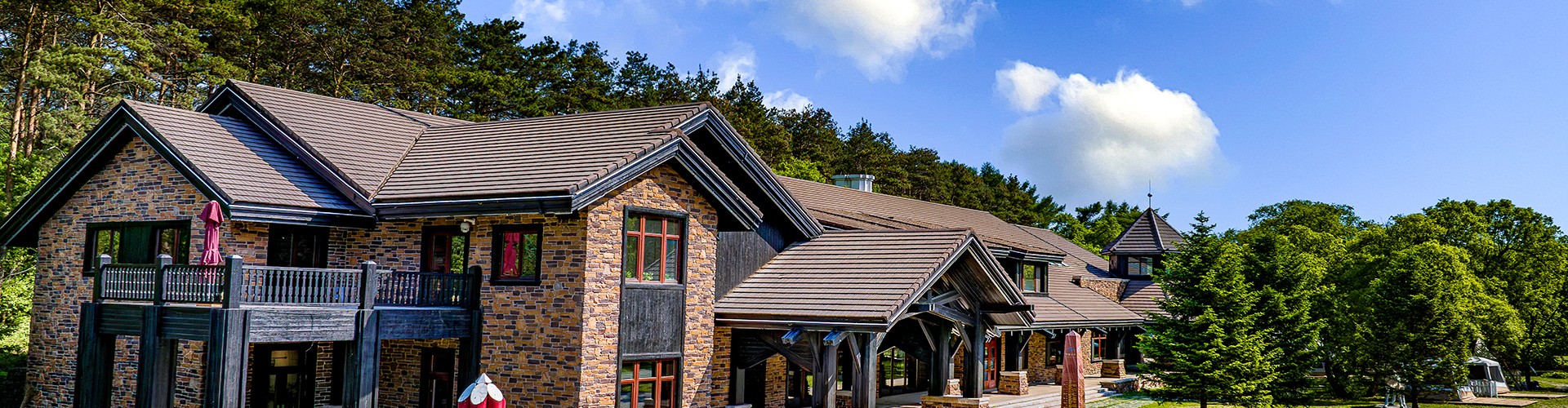
In the Jingyuetan Scenic Area,there is a red site called"Shangzhi Forest",which was once the resting place of the anti Japanese hero Zhao Shangzhi.The existence of Shang Zhilin not only reflects the deep tribute of the Jilin people to the anti Japanese heroes,but also symbolizes the continuous continuation of the red bloodline and witnesses the firm inheritance of the"Shangzhi Spirit".
Zhao Shangzhi,born in 1908 in Chaoyang County,Liaoning Province,joined the CPC at the age of 17 and became the fifth cadet of Huangpu Military Academy.After the September 18 Incident,he devoted himself wholeheartedly to the anti Japanese struggle and successively served as a member of the Standing Committee of the Communist Party of China's Manchuria Provincial Committee and Secretary of the Military Commission.He was one of the founders and leaders of the Northeast Anti Japanese United Army.On the battlefield of resistance against Japan,there was a saying of"Southern Yang and Northern Zhao"."Southern Yang"referred to Yang Jingyu,and"Northern Zhao"referred to Zhao Shangzhi.They jointly led the Northeast Anti Japanese United Army and launched a tenacious struggle against the Japanese aggressors in a difficult and arduous environment,dealing a heavy blow to the arrogance of the Japanese.The Japanese once offered a reward of 10000 yuan for the arrest of Zhao Shangzhi,shouting that"one coin of bone,one coin of gold,one coin of meat,one coin of silver"and lamenting that"small Manchukuo,big Zhao Shangzhi".
On February 12,1942,Zhao Shangzhi was seriously injured and captured while leading his troops to fight against the enemy.He chose death over surrender,treated death as his own,and harshly rebuked the enemy.The ruthless enemy cut off Zhao Shangzhi's head and transported him to Changchun for celebration,throwing his body into the ice cave of the Songhua River.From then on,the whereabouts of the general's head became a mystery.When Zhao Shangzhi sacrificed himself heroically,he was only 34 years old.
After Zhao Shangzhi's murder,the search for the hero's remains has never stopped.He conducted multiple searches and searches in important strongholds,but found nothing.On April 14,1946,the Northeast Democratic United Army briefly liberated Changchun.On April 15th,Chen Yun,the political commissar of the Harbin Frontline Field Command of the North Manchuria Military Region of the Northeast Democratic United Army,came to Changchun and demanded that Chen Zhengren,the director of the political department of the Northeast Democratic United Army,must continue to search for the heads of Zhao Shangzhi and others.Chen Zhengren led the political department staff to search in several key areas of Changchun,but the war in Northeast China quickly became tense again,and the search for Zhao Shangzhi's head was once again stopped.
In 1987,a Japanese scholar of justice who opposed militarism,Shizuka Yamazaki,came from Tokyo to Heilongjiang and visited experts in the history of the Communist Party of China,Jin Yuzhong,a veteran of the Anti Japanese United Front,and Li Min,a former subordinate of Zhao Shangzhi.He then returned to Japan to interview the Japanese spy,Masao Higashiyama,who had sent Zhao Shangzhi's head to Changchun at that time,and learned about the whereabouts of the head.At that time,due to the lack of anti-corrosion treatment on Zhao Shangzhi's head,it quickly began to rot,and the Japanese army decided to burn it.At this critical moment,Elder Tanxu,the abbot of Changchun Huguo Prajnaparamita Temple,arrived in time,hoping to bury Zhao Shangzhi's skull in the temple in a religious form.The Japanese Kwantung Army Commander in Chief Meizu Meiji believed that Master Tanxu was a monk who was far away from politics and devoted to Buddhism,so he agreed to this request.Jin Yuzhong and Li Min,who learned about the news of Yamazaki's branch,went to the Prajnaparamita Temple several times to search,but their search was unsuccessful because Master Tanxu had already passed away.
Until June 2004,military writer Jiang Bao,who was filming the large-scale documentary"Northeast Anti Japanese United Front",learned during an interview at the Huguo Prajna Temple in Changchun that a nameless head was dug out in the backyard while the temple was repairing its walls yesterday.After the head was exorcised,it was buried by the temple monk Shi Guoci in the pine forest of Jingyuetan Park in Changchun City.Jiang Baocai had a premonition that this was likely the head of Zhao Shangzhi,so he immediately called Li Min to inform him of the matter.Under the leadership of Shi Guoci,Jiang Baocai,along with members of the"Northeast Anti Japanese United Front"production team Li Junjie,Li Min who arrived from Harbin,and Zhao Shangzhi's two nephews Li Long and Li Ming,came to Jingyuetan Park to retrieve their heads.Finally,after being appraised by the Physical Evidence Appraisal Center of the Ministry of Public Security,they were confirmed to be the head of General Zhao Shangzhi.In 2008,on the occasion of the 100th anniversary of the birth of General Zhao Shangzhi,the Zhao Shangzhi Martyrs Cemetery was completed and completed,allowing the skulls of the brave soldiers to return to their hometown.
On September 2,2015,General Secretary Xi Jinping mentioned in his speech at the ceremony of awarding the commemorative medal for the 70th anniversary of the victory of the Chinese People's War of Resistance Against Japanese Aggression:"In the difficult times of the world,the times make heroes.During the 14 years of resistance against Japanese militaristic aggression,especially the 8-year comprehensive resistance war,all Chinese people united as one,united as one,and gathered the common will to resist foreign aggression and save the country.They wrote a magnificent epic that moved the world and the mountains,and a group of anti Japanese heroes such as Yang Jingyu and Zhao Shangzhi,as well as numerous heroic groups such as the"Five Heroes of Langya Mountain"of the Eighth Route Army,emerged.Whether on the front battlefield or behind enemy lines,whether directly participating in the war or providing support from the rear,all those who participated in the Chinese People's War of Resistance Against Japan are heroes of the war and national heroes.”
Looking back on the past and present,heroic stories are always sung among the pine waters of Baishan.The'Northern Lion'has forged an immortal soul with its unyielding iron bones.Although the figures of heroes have merged into the long river of history,their loyal souls tempered with blood always echo in the mountains and rivers.The revolutionary spirit is like an eternal torch,illuminating our direction in the journey of the new era and leading future generations to continue writing the glorious chapter of struggle with a childlike heart.